38 shortening nutrition label
Shortening Benefits And Side Effects | 2022 Ethical Consumer Guide Appearance: shortening is bad for / increases the risk of obesity, weight gain. Shortening is…. Acidic 3.5 pH level once digested. Gluten-free. Not a common food allergen. ENVIRONMENT. Water footprint: likely moderate, 4,971 liters of water used to produce 1 kilogram of refined palm oil / 596 gallons of water used to produce 1 pound of ... List of Non-Hydrogenated Products: Cookies, Shortening & Other Foods ... The loophole that allows this wording on the package labels is the USDA requirement that the serving size must have less than 0.5 grams of hydrogenated oil. Some commercially available vegetable shortening, like Crisco's, meets that requirement. The serving size, however, is just 1 tablespoon. Each cup has 16 tablespoons.
Nutrition Labels: How To Effectively Read and Understand Them to Help ... According to the FDA, which sets laws for US food producers, if a food contains less than ½ g of trans fat per serving, the label is allowed to read 0 g of trans fat. If the serving is unrealistically small, there may be a significant amount of trans fats after several servings are eaten.

Shortening nutrition label
Ingredients to avoid on a low-carb or keto diet - Diet Doctor If you miss a hidden sugar on the ingredient list, the carbohydrate count on the nutrition facts label boils carbohydrate content down to one number! More on that in our guide about several ways to use the nutrition facts label. 2. Limit starch When eating low-carb, limiting or completely avoiding refined starch is key. Food Labeling & Nutrition | FDA Food labeling is required for most prepared foods, such as breads, cereals, canned and frozen foods, snacks, desserts, drinks, etc. Nutrition labeling for raw produce (fruits and vegetables) and... The 5 Best Substitutions for Shortening | Southern Living As noted earlier, vegetable shortening is closest in structure to lard, just without the animal products. If you're baking something savory like biscuits, lard makes a particularly great substitute for shortening. 3. Coconut Oil.
Shortening nutrition label. CFR - Code of Federal Regulations Title 21 (5) Shortening, in which or in conjunction with which may be used one or any combination of two or more of the following: (i) Lecithin, hydroxylated lecithin complying with the provisions of part... Nutrition facts: your guide to reading the label | Babylon Health At the bottom of the Nutrition Facts label you can find a list of vitamins and minerals. On the right side of each item, you can see the % daily value (%DV). If a serving provides 20% or more of the %DV it is considered a good source, but if the %DV is 5% or less this is considered low. Ingredients List 7 Trans Fat Foods You Should Avoid at All Costs - Yahoo! While most processed foods shouldn't contain trans fats due to the FDA guidelines, some might sneakily still have them. That's why it's important to read the nutrition labels carefully. Food labels... How to Read a Nutrition Facts Label - Juju Betree The day-to-day recommendation for potassium is 4,700 mg and for sodium, 2,300 mg, so, when you appear at a diet specifics label, the excellent product would have at least as considerably potassium as sodium, if not much more. Maintain a Healthful Body weight or Get rid of Fat
How Are Serving Sizes Determined? | How To Read Nutrition Labels 1/2 cup-includes the volume for coatings and wafers for the novelty type varieties. _ piece (s) (_ g) for individually wrapped or packaged products; 1/2 cup (_ g) for others. Frozen flavored and sweetened ice and pops, frozen fruit juices: all types, bulk and novelties (e.g., bars, cups) 85 g. How to decode food labels to boost your nutrition - Scrubbing In When the Nutrition Facts label lists a food containing "0 g" of trans fat but includes "partially hydrogenated oil" in the ingredient list, the food contains some trans fat but less than 0.5 grams per serving. So, if you eat more than one serving, you could consume too much trans fat. Cholesterol Understanding Food Labels and Ingredient Lists: FAQs and Do's and Don'ts Fish. Most dietary supplements. Fresh eggs. Foods with insignificant amounts of the nutrients on the required label, such as coffee, tea, spices, flavor extracts, and food colors. These may contain ingredient labels but are unlikely to contain nutrition facts labels. Packaged single-ingredient meat products, such as deer, bison, rabbit, quail ... Understanding Nutrition Labels: What You Need to Know When ... - AlignLife 1) Read the nutrition labels and stay curious about food. As you can see, foods aren't always what they seem. The only way to know what you're really getting is to buy mostly whole food and learn to read your nutrition labels closely. 2) Shop the perimeter. In general, the healthier, whole foods are located around the perimeter of the store.
What Is Partially Hydrogenated Oil? And Why It's In Your Food Read the nutrition labels and avoid foods that include partially hydrogenated oils. According to the FDA , companies can label foods as free of PHO (trans fat) if they contain .5 grams or less per ... Label reading 101 - Healthy Food Guide Step 1: Check front-of-pack claims Manufacturers often use clever wording like 'low in salt' and '97% fat free', but there are lots of rules surrounding nutrition claims. For instance, a 'low-salt' food must have no more than 120mg of sodium per 100g. A food claiming to be '97% fat free' must have a maximum of three per cent fat. CFR - Code of Federal Regulations Title 21 (a) (1) ingredients required to be declared on the label or labeling of a food, including foods that comply with standards of identity, except those ingredients exempted by § 101.100, shall be... Do You Know How to Read Nutrition Labels? - APT-LY All food makers in the country must now declare the following nutritional data per 100 g, 100 ml, or per serving of the product on a label: - kcal value of energy. - carbohydrate and sugar totals. - the protein content, - fat in grams (g) or milliliters (mL), and. - vitamins and minerals that have a health claim.
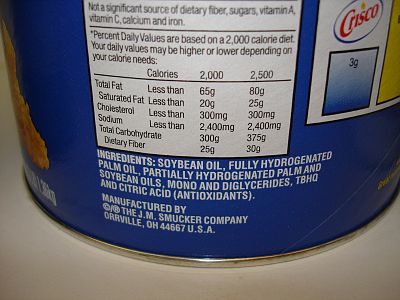
What's Crisco made of if vegetables don't make oil.
How To Read Food Labels: What's On it & What to Avoid When you turn any food item around, the first thing you should see is the Nutrition Facts as part of the food label. This label has different parts to it. ... Other foods that commonly contain polysorbate 80 include: food shortening, processed creams, chewing gum, gelatin, vitamins, and condiments. It seems harmless, but the Material Safety ...

Easter Egg Dipper Treats™ | Rice Krispies®
How to Understand the Nutrition Facts Label - HealthyBeat Looking at the serving size is important because the nutrition facts listed will apply to this portion. For example, if the label lists "200 calories," this means that there will be 200 calories per serving. If the serving size is 1 cup and you eat 2 cups, you consumed 400 calories. Therefore, it is important to compare the serving size to ...

Cookie Dough Dream | Department of Food Science
How to Read a Nutrition Facts Label - Everyday Health For trans fats, nutrition labels are tricky. "The nutrition facts label can have 0 g listed next to trans fat, as long as the product has less than 0.5 g of trans fat per serving," says Goergen....
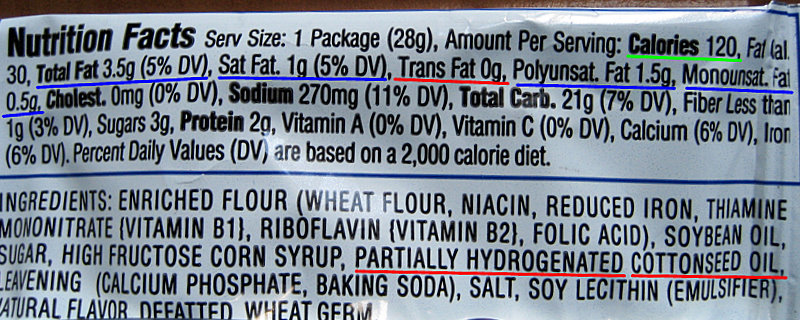
The Trans Fat Lie!
Does Crisco Go Bad? - The Optimal Answer 2022 - Lacademie That goes around 100% fat in shortening. So Crisco fat is high in calories but does not contain protein or carbs. Also, you won't find many minerals and vitamins in this kind of fat. As stated by NutritionData, one tablespoon (13g) of shortening is equivalent to: Nutrients. Value.

Meals Ready to Eat | Survivormate
What Is Partially Hydrogenated Oil? And Why It's In Your Food According to the FDA, companies can label foods as free of PHO (trans fat) if they contain .5 grams or less per serving of trans fat. According to the American Heart Association, people who need to lower their LDL cholesterol should reduce trans fat and saturated fat intake to 5-6% of daily calories.
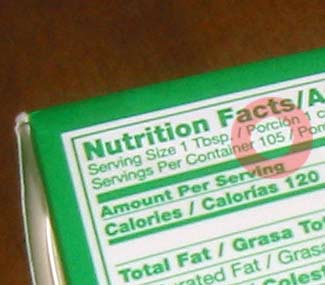
How Much is Inside Success story: Lard
Your guide to understanding Nutrition Facts labels | The Star The list gives you information on 13 core nutrients: fat, saturated fat, trans-fat, cholesterol, carbohydrate, sodium, fibre, sugars, protein, vitamin A, vitamin C, calcium and iron. If these...
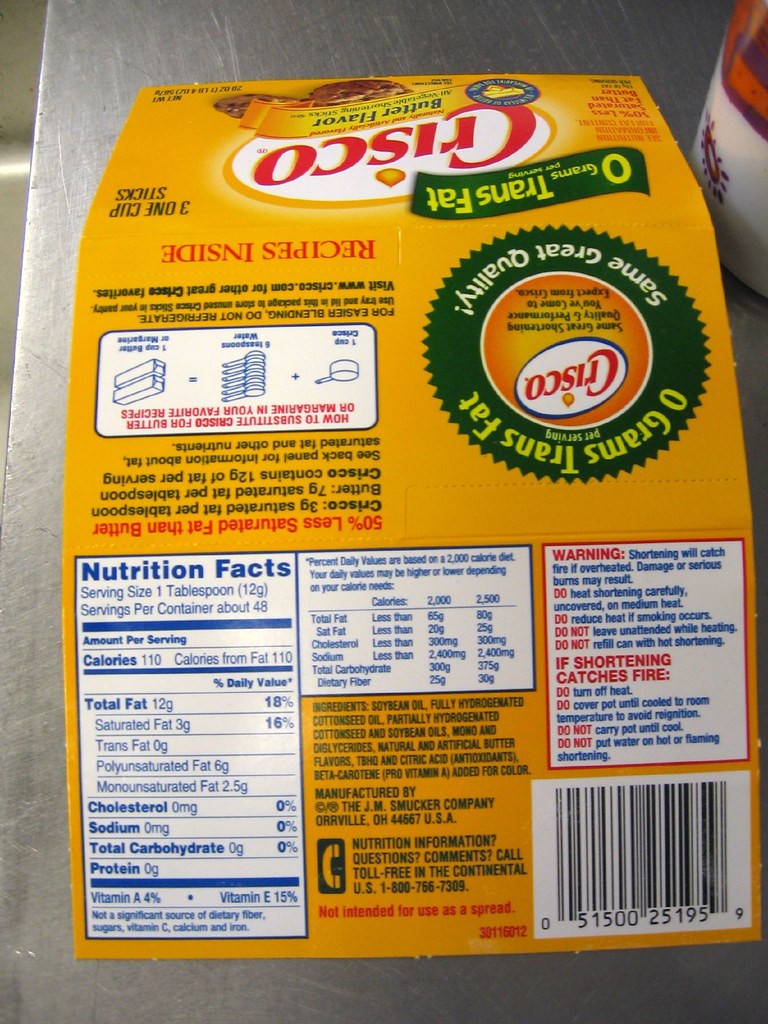
Crisco Butter Flavored sticks | Crisco nutrition label and p… | Flickr
A consumer's guide to reading nutrition labels - The Loop Calories are a measurement of how much energy you get from a serving of a particular food. To achieve or maintain a healthy body weight, you must balance the number of calories you eat and drink with the number of calories your body uses. Your individual calorie needs are largely dependent on age, sex, height, weight, and physical activity level.

Is the labelling of trans fats mandatory?
How To Read Food Labels for Healthy & Clean Eating Shortening Canola oil Palm oil Kernel oil Rest assured, not all oils are bad. Replace over-processed oils with products that contain healthier alternatives: olive oil, coconut oil, avocado oil, and ghee. You'll find these oils on the Clean Pantry Checklist - subscribe to my newsletter to receive your free copy in your inbox.

Rice Krispies Kellogg's Rice Krisipes Squares Bars 176g - Original, 8 ...
SURPRISING WAYS FOOD LABELS ARE MISLEADING - Dr. Morton Tavel Furthermore, foods with less than 0.5 grams of trans fat per serving are listed on the nutrition label as "trans fat, 0 grams." ... high quality sources. Scan the ingredient lists from other foods for the words "shortening," or "hydrogenated" oils. When eating outside the home, avoid deep-fried foods.
Post a Comment for "38 shortening nutrition label"