41 layers of the skin labeled
Skin: Cells, layers and histological features | Kenhub The epidermis is the uppermost layer of the skin. Going from deep to superficial, it consists of five layers; basal layer (stratum basale/germinativum) prickle cell layer (stratum spinosum) granular layer (stratum granulosum) clear layer (stratum lucidum) cornified layer (stratum corneum) To remember these layers, check out this mnemonics video: Skin: Layers, Structure and Function - Cleveland Clinic As the body's largest organ, skin protects against germs, regulates body temperature and enables touch (tactile) sensations. The skin's main layers include the epidermis, dermis and hypodermis and is prone to many problems, including skin cancer, acne, wrinkles and rashes. Appointments 216.444.5725 Appointments & Locations Contact Us Anatomy
5.1 Layers of the Skin - Anatomy & Physiology Skin that has four layers of cells is referred to as "thin skin." From deep to superficial, these layers are the stratum basale, stratum spinosum, stratum granulosum, and stratum corneum. Most of the skin can be classified as thin skin. "Thick skin" is found only on the palms of the hands and the soles of the feet.
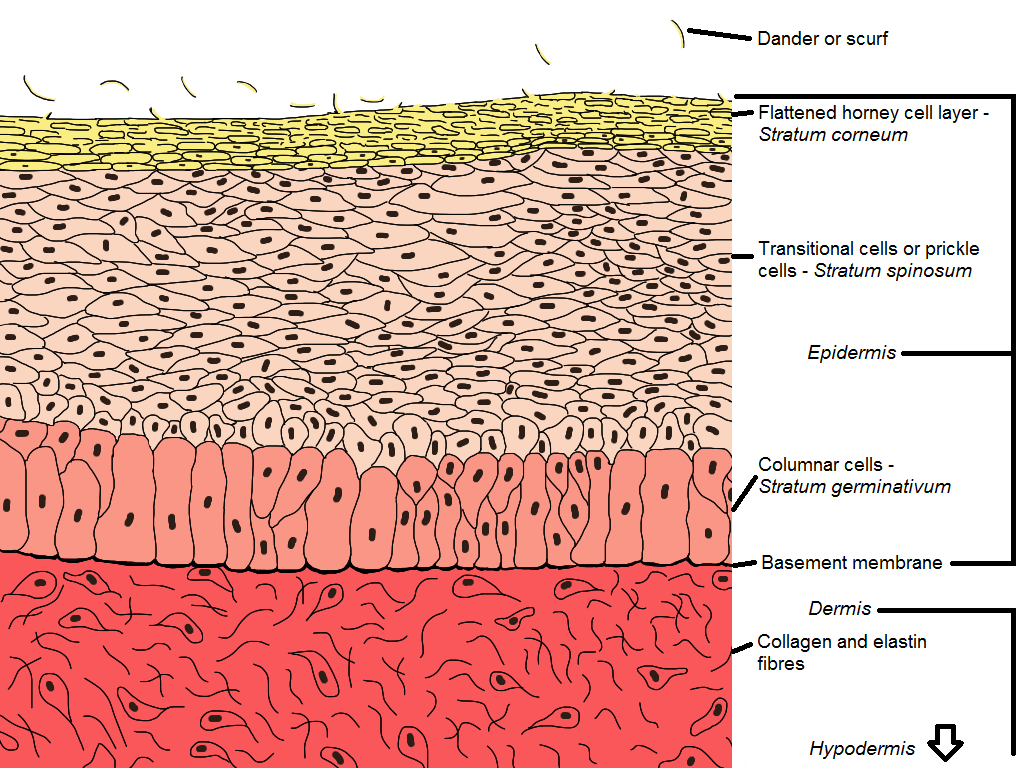
Layers of the skin labeled
Anatomy of the Skin Layers of the Skin. Within the epidermis, there are 5 layers: Stratum Germinativum: the deepest layer, contains melanocytes. Stratum Spinosum: contains keratinocytes. Stratum Granulosum: contains mature keratinocytes. Stratum Lucidum: only present in glabrous skin. Stratum Corneum: contains non-viable keratinised cells. Anatomy, Skin (Integument) - StatPearls - NCBI Bookshelf The skin is primarily made up of three layers. The upper layer is the epidermis, the layer below the epidermis is the dermis, and the third and deepest layer is the subcutaneous tissue. The epidermis, the outermost layer of skin, provides a waterproof barrier and contributes to skin tone. Skin Anatomy: The Layers of Skin and Their Functions The skin is the body's largest organ. It is made of three layers, each of which has specific functions. The outermost epidermis is responsible for producing new skin cells, protecting the body from unwanted substances, and retaining moisture to keep the skin well hydrated. The middle dermis is responsible for supporting and strengthening the skin.
Layers of the skin labeled. Human Skin: Layers, Function & Structure - Study.com The first, topmost, or superficial, layer of the skin the sun's rays hit is called the epidermis. Again, the epidermis is the outermost layer of the skin. The epidermis is itself made up of several... Dermis (Middle Layer of Skin): Layers, Function & Structure While your epidermis is the thinnest layer of skin, your dermis is the thickest layer of skin. Your dermis contains collagen and elastin, which help make your dermis thick and supportive of your skin's overall structure. All of your connective tissues, nerve endings, sweat glands, oil glands and hair follicles exist in your dermis. Anatomy and Histologic of Intrinsic Aging Skin - academia.edu Skin is a part of the body that is in direct is also characterized by the development of various contact with the external environment and undergoes benign neoplasms, caused by impaired regulation of two types of skin aging, namely intrinsic and extrinsic cellular proliferation.2 This literature review will aging.2 discuss the mechanism of ... The Skin (Human Anatomy): Picture, Definition, Function and Skin Conditions The skin is made up of three main layers (from top to bottom) Epidermis: The outer or top layer of the skin. The majority is composed of keratinocytes; the cells that take part in the skin renewal process. Melanocytes are melanin -producing cells. Melanin gives the skin its color, which varies from person to person.
Layers of the Skin | SEER Training The subcutis is the innermost layer of the skin, and consists of a network of fat and collagen cells. The subcutis is also known as the hypodermis or subcutaneous layer, and functions as both an insulator, conserving the body's heat, and as a shock -absorber, protecting the inner organs. It also stores fat as an energy reserve for the body. 5.1 Layers of the Skin - Anatomy and Physiology 2e | OpenStax Skin that has four layers of cells is referred to as "thin skin." From deep to superficial, these layers are the stratum basale, stratum spinosum, stratum granulosum, and stratum corneum. Most of the skin can be classified as thin skin. "Thick skin" is found only on the palms of the hands and the soles of the feet. Skin Anatomy - Hopkins Medicine A basic understanding of skin anatomy is important when explaining the process of skin biopsy. Each component of the skin plays a role in its daily function, therefore every component is a source of vital information that can be captured and assessed with a skin biopsy. Below are a few of the basic components of skin followed by a brief ... PDF Anatomy of Skin - Lancaster High School Layers of the Epidermis Most areas of the body have four strata or layers. This is referred to as thin skin. In areas of the body exposed to greater friction, like the fingertips, palms and soles of the feet the epidermis has five strata or layers. This is referred to as thick skin.
Skin Ultrastructure - Epidermis - Dermis - TeachMeAnatomy Skin can be thin, hairy, hirsute, or glabrous. Glabrous skin is the thick skin found over the palms, soles of the feet and flexor surfaces of the fingers that is free from hair. Throughout the body, skin is composed of three layers; the epidermis, dermis and hypodermis. We shall now examine these layers in more detail. By OpenStax College [CC ... Layers of the Skin - Anatomy and Physiology The skin is composed of two main layers: the epidermis, made of closely packed epithelial cells, and the dermis, made of dense, irregular connective tissue that houses blood vessels, hair follicles, sweat glands, and other structures. Beneath the dermis lies the hypodermis, which is composed mainly of loose connective and fatty tissues. The Skin (Human Anatomy): Picture, Definition, Function, and Skin ... Skin has three layers: The epidermis, the outermost layer of skin, provides a waterproof barrier and creates our skin tone. The dermis, beneath the epidermis, contains tough connective tissue, hair... Anatomy, Skin (Integument), Epidermis - StatPearls - NCBI Bookshelf It is made up of three layers, the epidermis, dermis, and the hypodermis, all three of which vary significantly in their anatomy and function. The skin's structure is made up of an intricate network which serves as the body's initial barrier against pathogens, UV light, and chemicals, and mechanical injury.
Integumentary (surface of the bird) - Poultry Hub Australia
Skin Cross-Section - Anatomy and Physiology - Innerbody The reticular layer makes up the majority of the skin's thickness and is primarily made of dense irregular fibrous connective tissue. A thick web of collagen (the strongest protein found in nature) and elastin fibers makes up the dense irregular connective tissue and provides great strength and elasticity to the dermis. Many arterioles and ...

Labeling Thick/Thin Skin Model - PurposeGames
Label the layers of the skin Diagram | Quizlet Start studying Label the layers of the skin. Learn vocabulary, terms, and more with flashcards, games, and other study tools.

Free coloring pages of integumentary system | Integumentary system ...
Skin - Wikipedia Keratinocytes are the major cells, constituting 95% of the epidermis, while Merkel cells, melanocytes and Langerhans cells are also present. The epidermis can be further subdivided into the following strata or layers (beginning with the outermost layer): Stratum corneum Stratum lucidum (only in palms and soles) Stratum granulosum Stratum spinosum
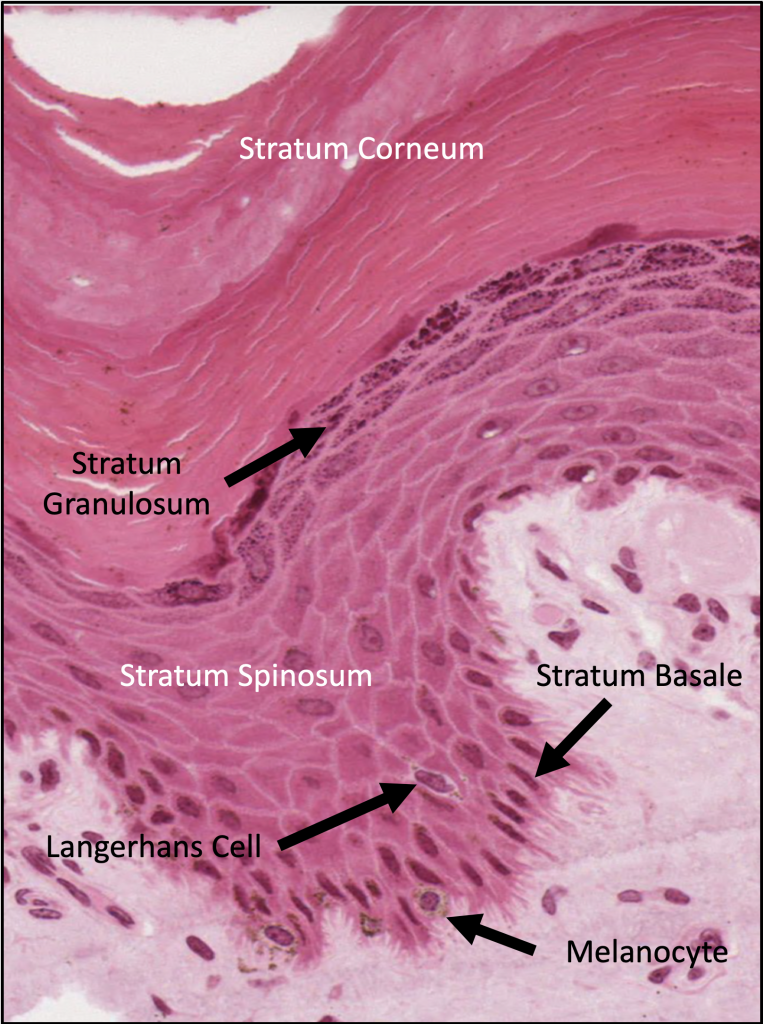
Integument Histology Notes – Medical Histology – Jacobs School of Medicine
Anatomy of the Skin The skin is the body's largest organ. It serves as a protective shield against heat, light, injury, and infection.

Layers Of Human Skin Melanocyte And Melanin Stock Vector Art & More ...
The Skin: 7 Most Important Layers, Functions & Thickness Stratum lucidum. Stratum granulosum. Stratum spinosum. Stratum basale. Dermis. Hypodermis. The first five layers form the epidermis, which is the outermost, thick layer of the skin. All seven layers vary significantly in their anatomy and function. The skin serves various functions that include.
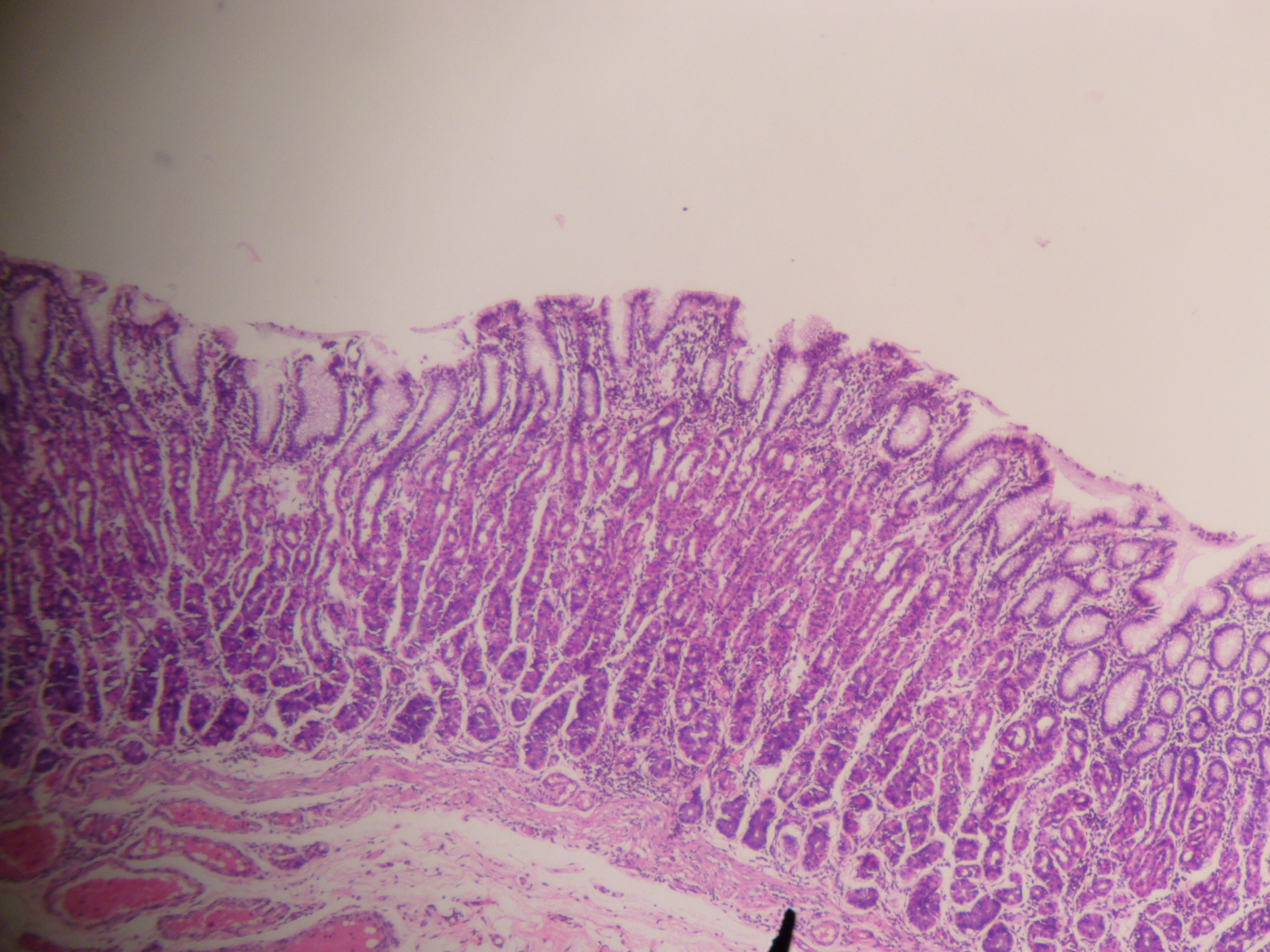
Stomach - wikidoc
Anatomy of the Skin | SEER Training Basically, the skin is comprised of two layers that cover a third fatty layer. These three layers differ in function, thickness, and strength. The outer layer is called the epidermis; it is a tough protective layer that contains the melanin -producing melanocytes.

Histology of the Skin - YouTube
Anatomy of the Skin | Northwestern Medicine The skin is the body's largest organ. It serves as a protective shield against heat, light, injury, and infection. Anatomy of the Skin | Northwestern Medicine

3D skin model project | Skin model, Skin model project diy, Projects
Skin anatomy - Mayo Clinic Skin anatomy Print Sections Products and services Your skin has three layers that house your sweat and oil glands, hair follicles, melanocytes, and blood vessels. Share Tweet Advertisement Mayo Clinic does not endorse companies or products. Advertising revenue supports our not-for-profit mission. Advertising & Sponsorship Policy Opportunities
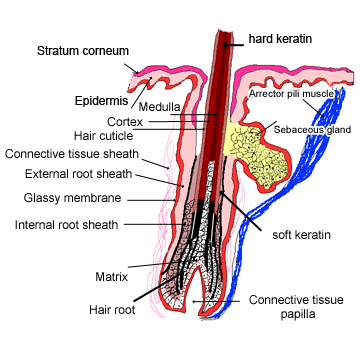
Skin: The Histology Guide
Layers of the skin: label Diagram | Quizlet Layers of the skin: label STUDY Learn Flashcards Write Spell Test PLAY Match Gravity Created by reptoHealyTEACHER Terms in this set (15) hair follicle sweat gland nerve cells adipose tissue blood vessels muscle layer Epidermis Dermis Hypodermis (Subcutaneous) Sweat pore Sebaceous gland Hair shaft Arrector pili muscle
Post a Comment for "41 layers of the skin labeled"